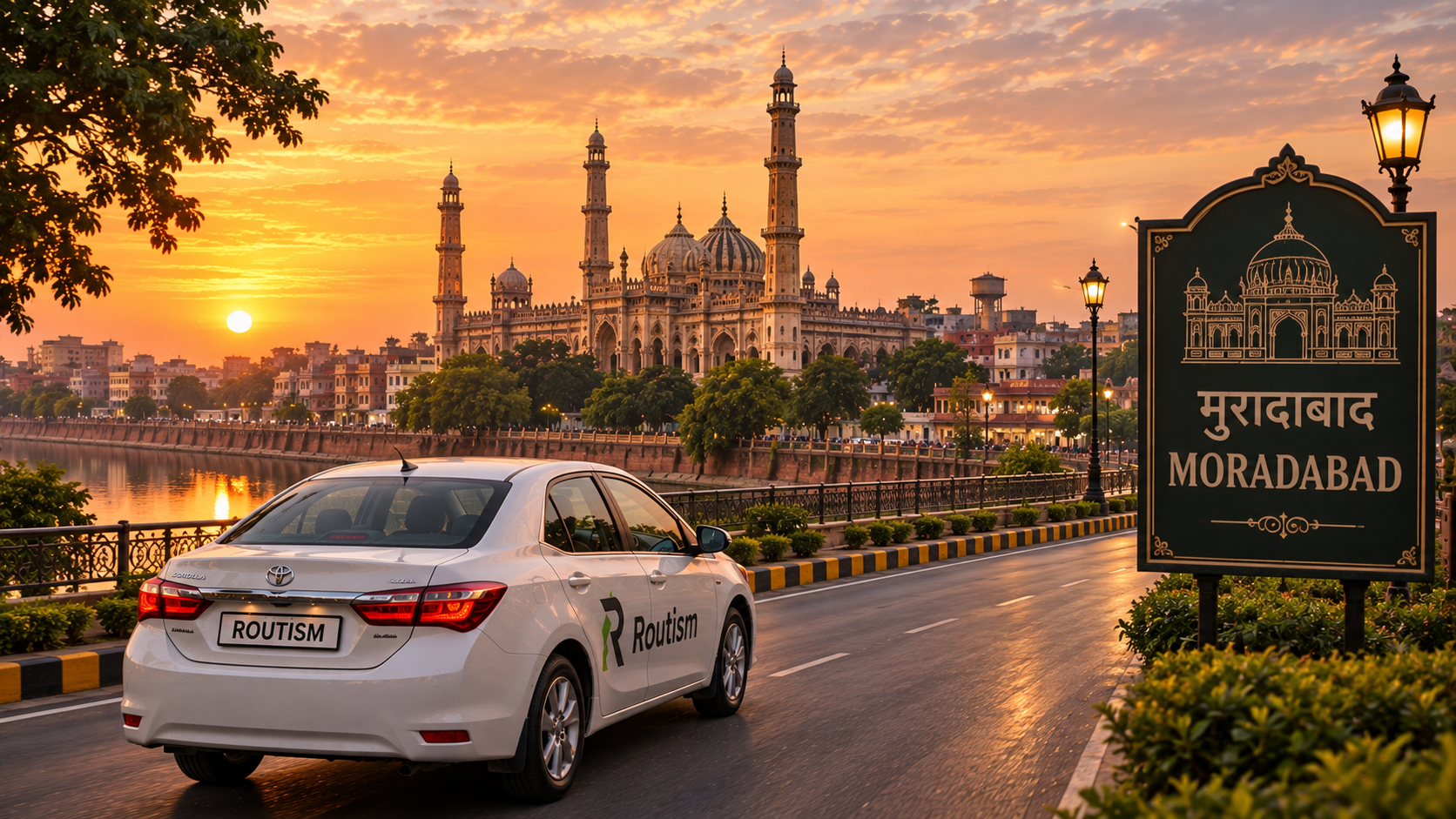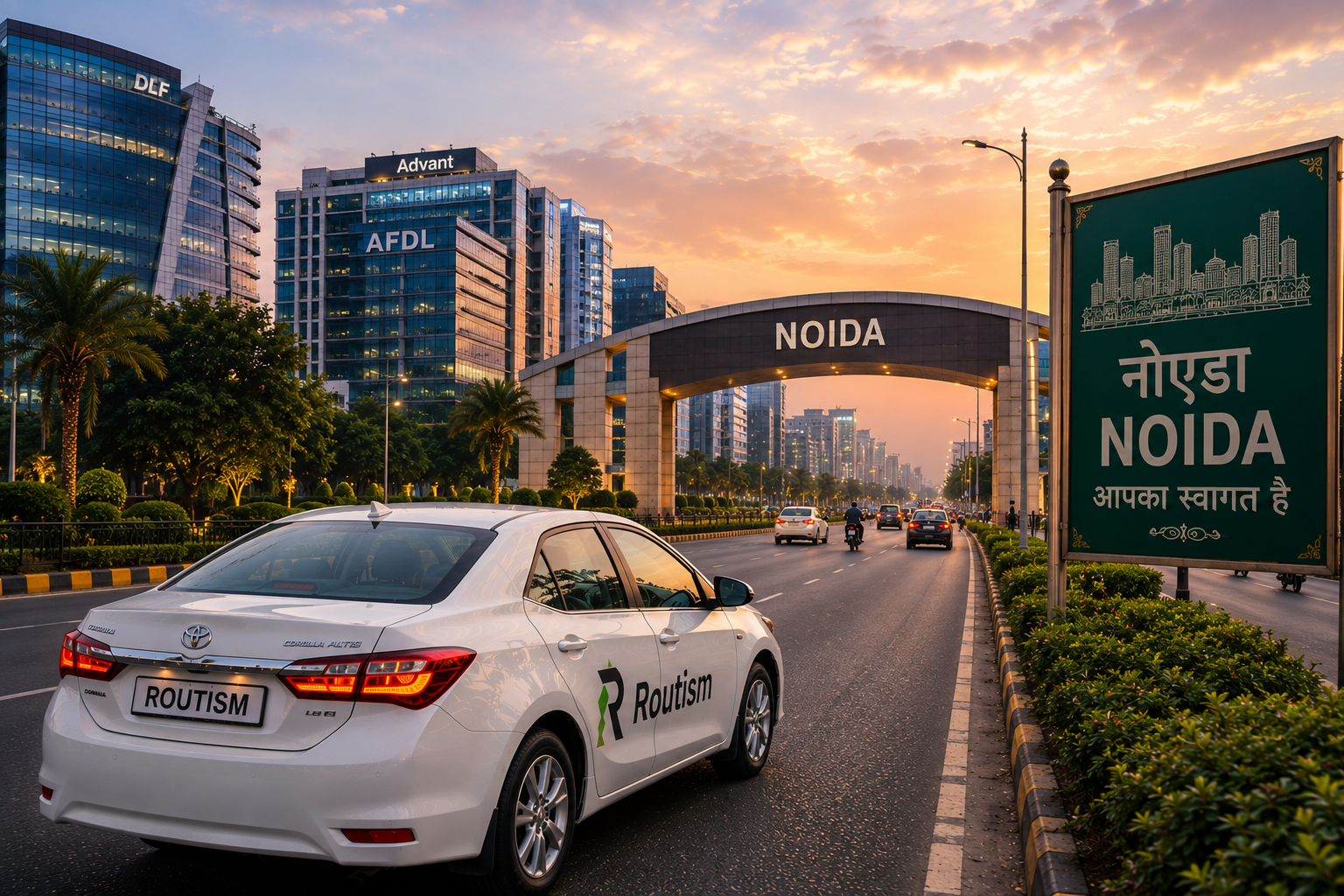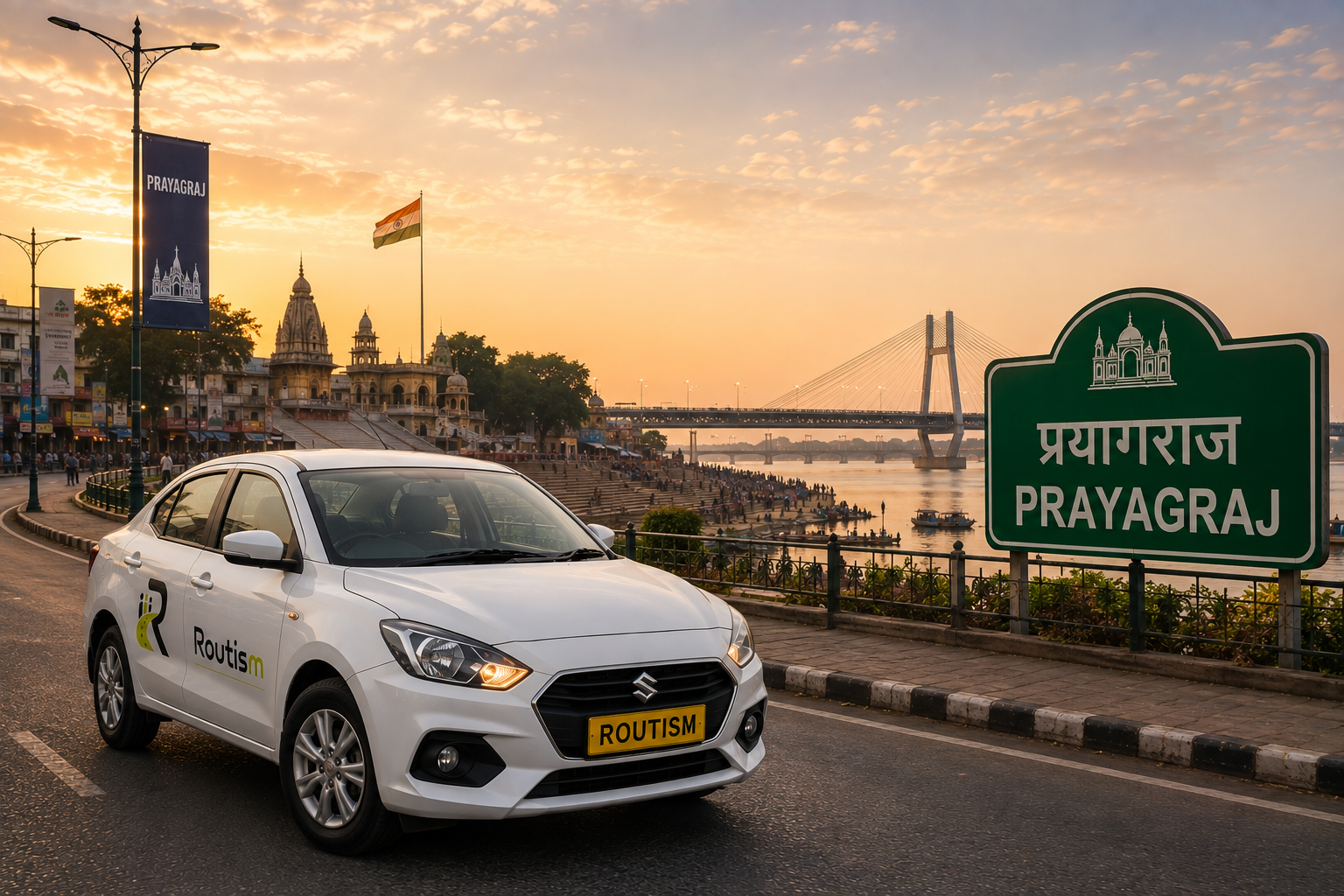
Routism connects verified drivers and riders across Uttar Pradesh for Rides, Shared Booking and Daily Commute — safe, affordable travel. Starting from Lucknow.
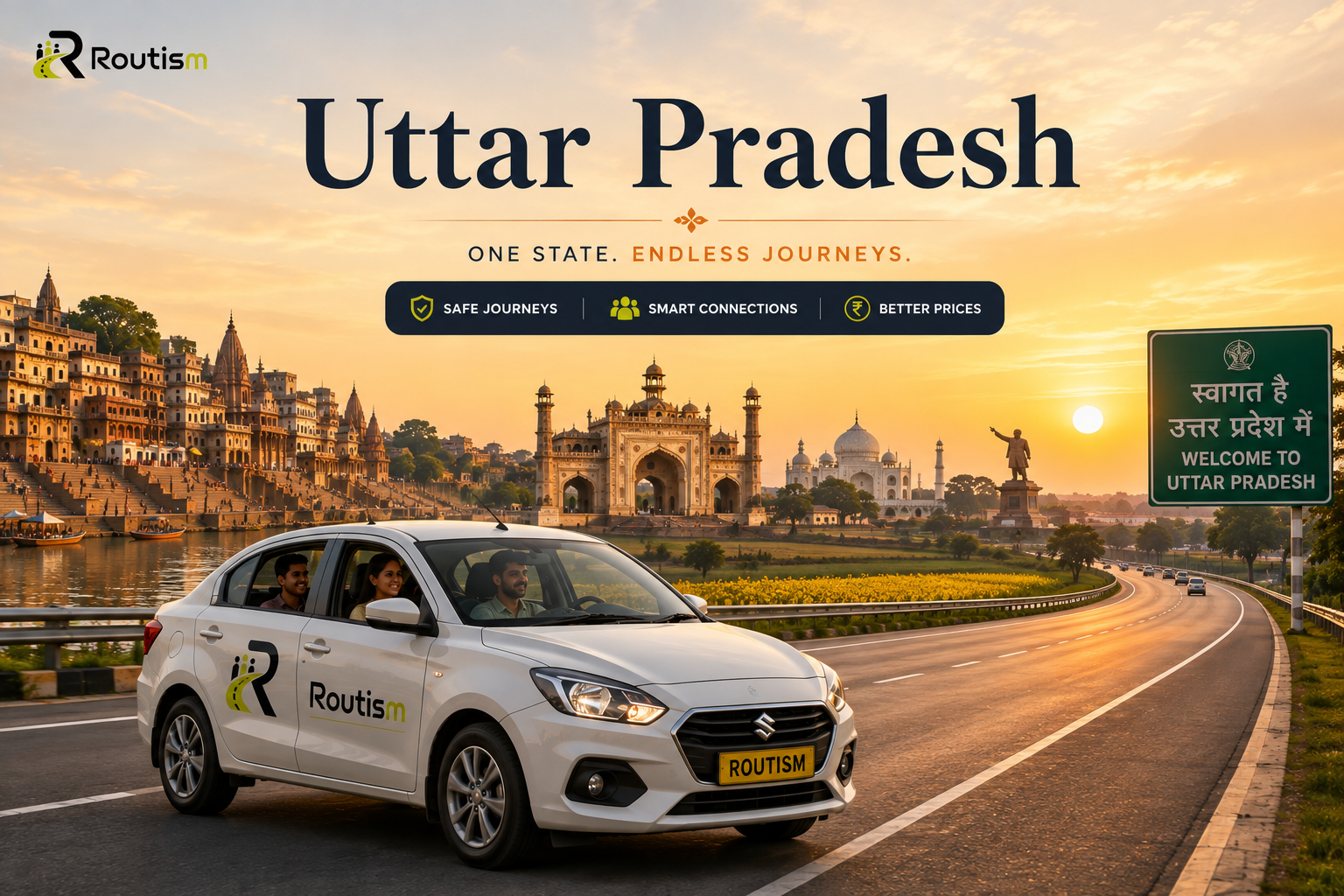
Uttar Pradesh is India's most populous state, and on any given weekday, one of its most congested. Millions of people move every day for work, education, business, healthcare, family and tourism — inside cities like Lucknow, Kanpur, Noida, Ghaziabad, Agra and Varanasi, and along the long intercity highways that connect them. Routism is a mobility platform built to connect all of these journeys through one system: verified drivers, verified riders, and a set of booking tools flexible enough to cover a five-minute local hop and a five-hour outstation trip with the same underlying trust.
Our approach is simple — connect people, simplify journeys, and make mobility better for Uttar Pradesh. We are starting our journey from Lucknow, the state capital and its largest single commuter market, and building Routism to serve customers and drivers across every major city and region of Uttar Pradesh from there. Join the waiting list to get early access the moment we open in your city, and to help decide which Uttar Pradesh route we switch on next.
The numbers behind Uttar Pradesh's daily traffic make the case on their own. In Lucknow alone, more than 3.17 million vehicles are currently registered with the state transport department's VAHAN portal — over 2.1 million two-wheelers and roughly 780,000 four-wheelers among them — and, per Down To Earth's reporting on India's mobility crisis, that number is growing by 10–12% every single year. Research from CEEW shows more than 13 lakh vehicles have been added in Lucknow in the last decade alone — roughly 90% of them private cars and two-wheelers — while public bus capacity across the city still runs at a fraction of the recommended benchmark. That same pattern repeats, to varying degrees, in every fast-growing Uttar Pradesh city.
At the same time, Uttar Pradesh already leads India in electric vehicle adoption, with over 414,000 registered EVs — more than Delhi and Maharashtra combined for that metric — proof that the state's commuters are ready to change how they travel the moment a genuinely better option exists. Routism is that option: not one more vehicle added to the road, but a way to make far better use of the millions already on it.
Routism is built around three core booking systems, each designed for a different kind of Uttar Pradesh journey.
Customers can book a ride to match their exact travel need, with fair, transparent, competitive fares and rating-based trust behind every driver.
Shared Booking is for customers travelling on similar routes at similar times. A customer enters their pickup and drop-off locations, and Routism identifies compatible co-riders travelling the same way. When a suitable match is available, co-riders join the same booking and split the cost between them.
Shared Booking helps to:
Shared Booking can support local, one-way, outstation and round-trip journeys, depending on route compatibility — same direction, same journey, less cost, better utilisation.
Daily Commute is designed for people who travel the same route at the same time, day after day — office employees, students, teachers, professionals, and any other regular commuter making the same journey repeatedly.
Instead of creating a fresh booking every single day, customers can set up a recurring booking for multiple days at once. Routism connects them with suitable drivers and co-commuters travelling on a compatible route and schedule, and the recurring arrangement continues until either side cancels it, in line with the applicable booking terms.
Daily Commute provides:
For customers: stop searching for the same ride every day — set your route once and commute with ease. For drivers: build regular customers and spend less time searching and waiting for new bookings every day.
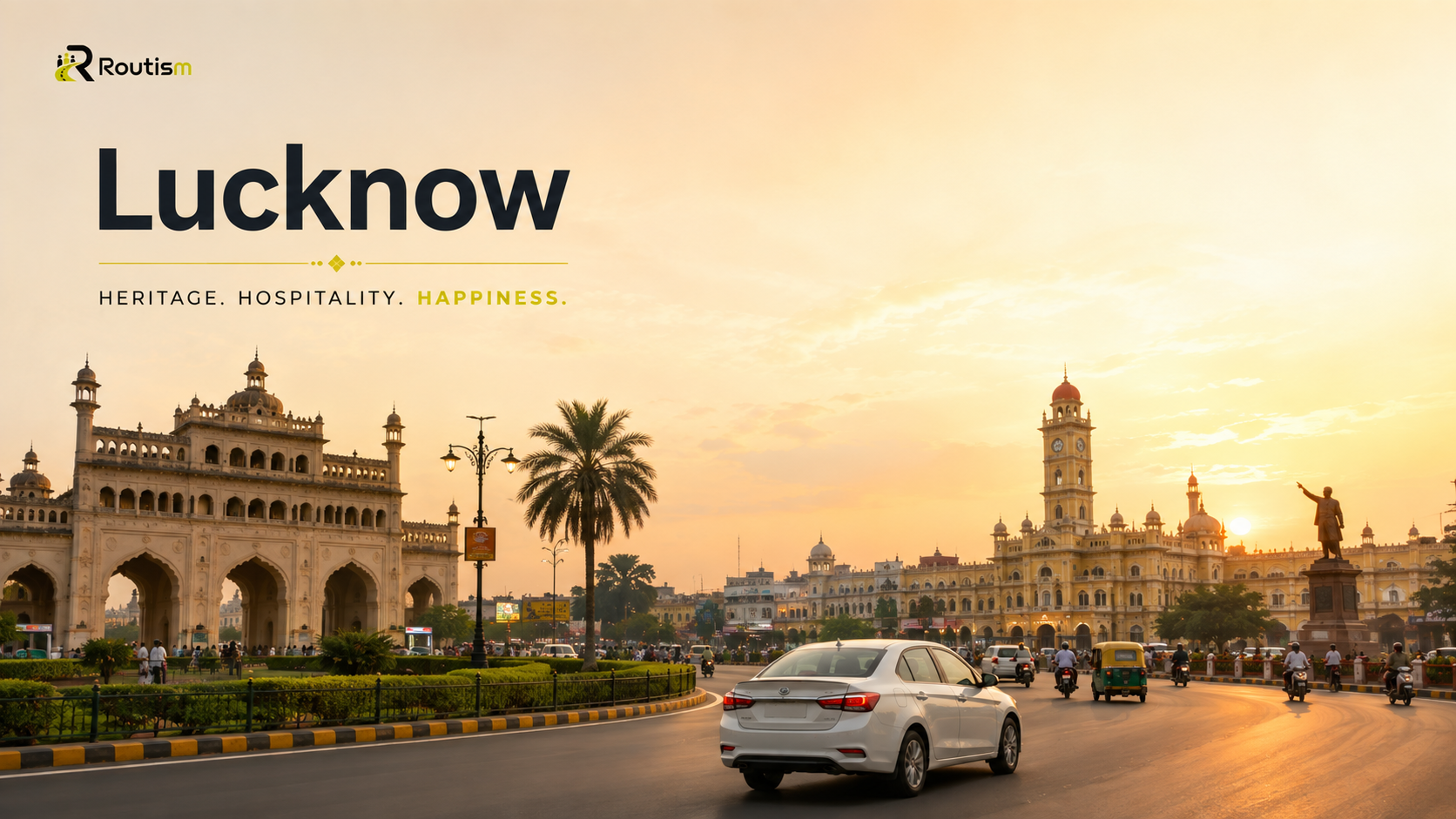
Lucknow is our launch city and an important part of Routism's initial growth strategy — as Uttar Pradesh's capital, its largest single commuter market, and the hub nearly every major intercity route in the state already radiates out from. The Lucknow city page covers locality-level detail — Gomti Nagar, Hazratganj, Indira Nagar, Aliganj, Alambagh, Vibhuti Khand and more — along with dedicated pages for the places we already cover inside the city.
From Lucknow, Routism is designed to expand across all major cities and regions of Uttar Pradesh, creating one connected network of customers, drivers and journeys. Our roadmap follows the population and commute pressure evident across the state:
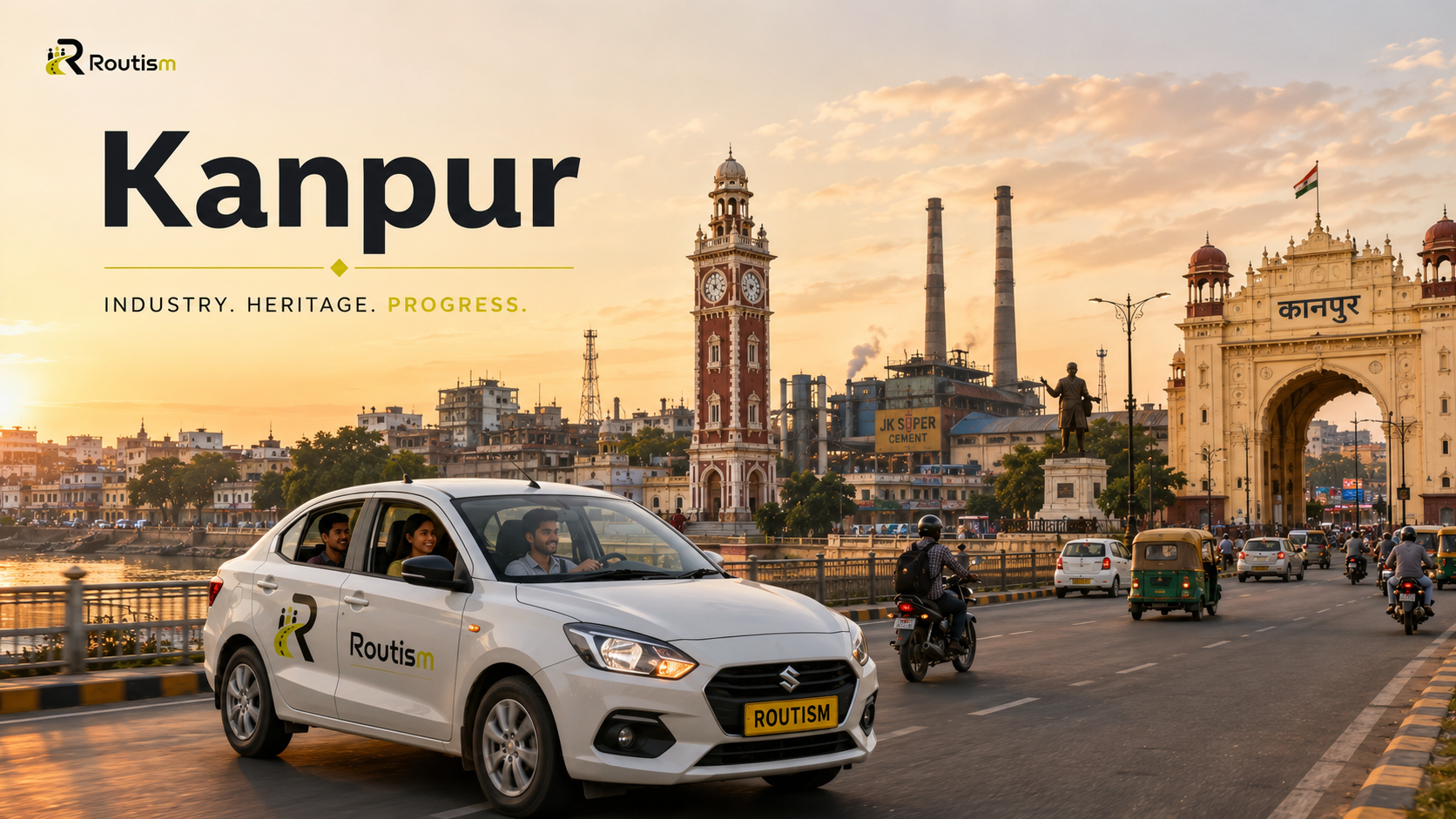
Kanpur, Uttar Pradesh's largest industrial city and Lucknow's closest major neighbour, carries one of the state's heaviest business-travel corridors — daily commercial traffic, weekend family trips, and a steady flow of professionals moving between the two cities.
Ayodhya has seen a sharp rise in pilgrim and tourist travel in recent years, with visitor numbers to the Ram Janmabhoomi complex climbing well past what local taxi and bus capacity was originally built for.
Varanasi, one of India's oldest and most-visited spiritual destinations, draws a similar mix of religious travellers, students and tourists, with narrow old-city roads and heavy seasonal footfall that make shared, verified travel a genuinely practical option.
Prayagraj, home to major universities and one of the country's largest periodic religious gatherings, sees enormous seasonal travel spikes on top of constant year-round student and family traffic.
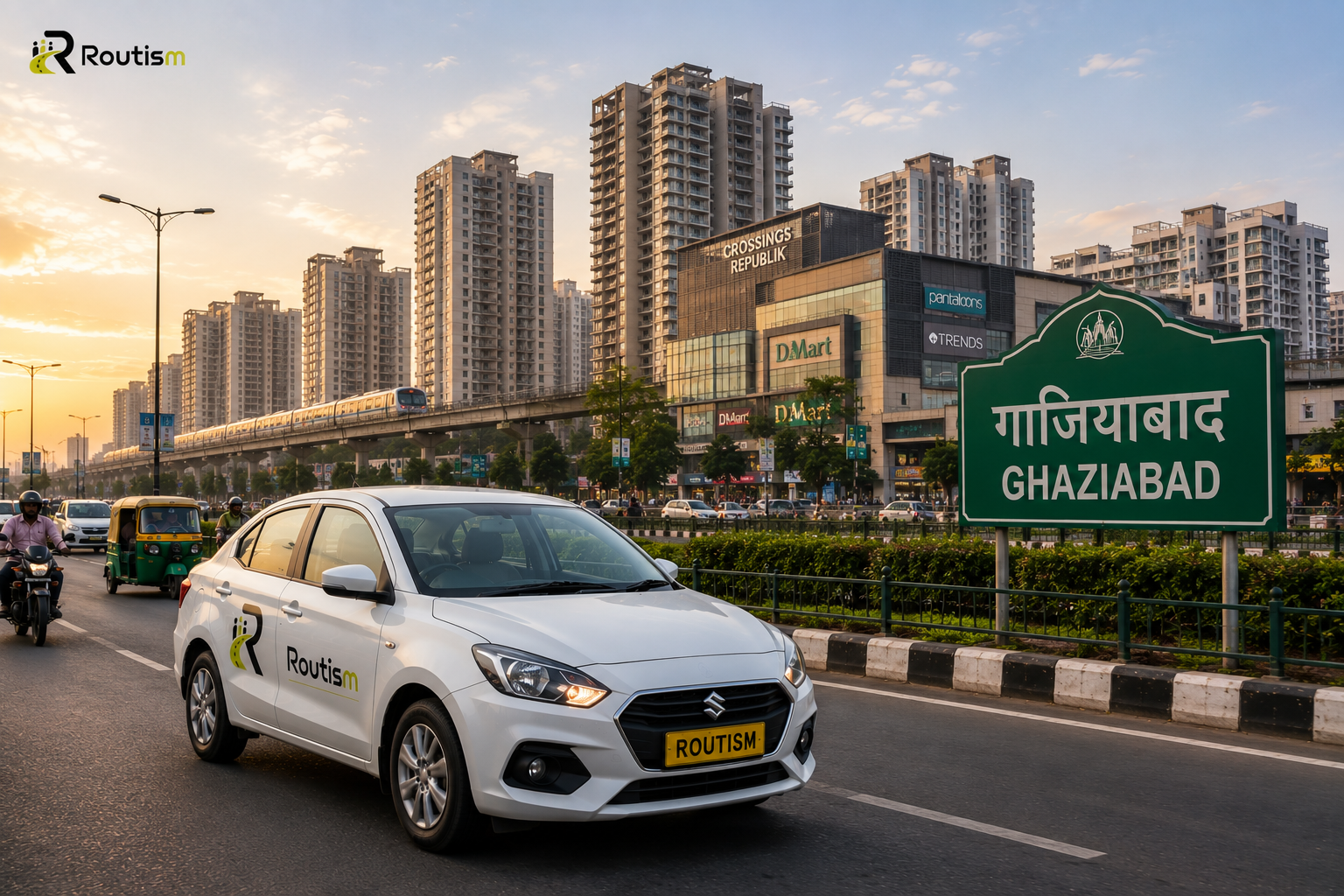
Noida and Ghaziabad, both part of the National Capital Region, carry dense daily office traffic on some of the most congested urban roads in the country — exactly the high-frequency, high-overlap pattern Daily Commute is built for.
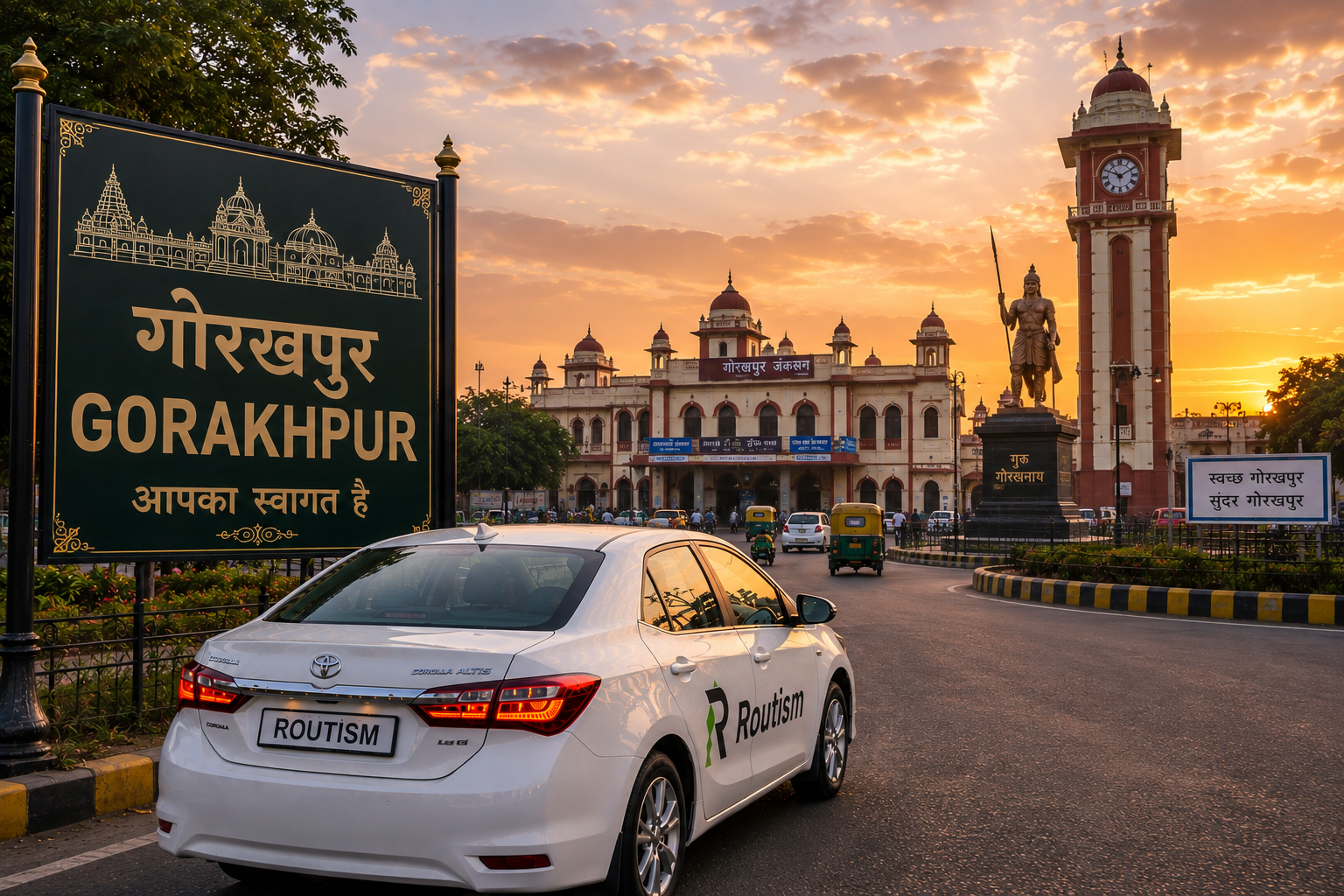
Agra and Gorakhpur round out the roadmap as major tourism and regional-hub cities, each with its own dense mix of local commute and steady intercity travel.
Our long-term objective is a mobility ecosystem where a customer can use Routism regardless of which Uttar Pradesh city they're travelling from or travelling to — and every signup on the waiting list, in any of these cities, is what moves that roadmap forward.
Uttar Pradesh sits at the centre of one of India's biggest religious and tourism travel circuits, and Outstation Rides and Shared Booking are built directly for it. Lucknow to Ayodhya is one of the most-travelled routes in the state, carrying both daily visitors and long pilgrimage traffic. Lucknow to Varanasi and Lucknow to Prayagraj carry similarly heavy religious and family travel, especially around festival seasons and college admission cycles. Kanpur to Agra links two of the state's biggest industrial and tourism hubs. In almost every case today, a solo traveller either pays full fare for an entire cab or drives the whole distance alone with empty seats beside them. Routism turns that same drive into a shared, verified, split-cost journey for everyone travelling the same way.
Verified drivers. Every driver on Routism goes through a verification process before their profile can accept a booking, so customers connect with people who have actually been checked, not strangers picked up at random.
Affordable travel. Competitive fares across Rides, and cost-splitting through Shared Booking, help customers reduce what they spend on travel — without giving up convenience.
Flexible booking. Choose between individual rides (local, one-way, outstation or round-trip), shared journeys, or recurring daily commutes — whatever the trip actually needs.
Ratings and trust. Customer and driver ratings build transparency and accountability into every corner of the Routism community, so decisions about who to travel with are based on real signals, not guesswork.
Better vehicle utilisation. Shared bookings make fuller use of the seats already on the road across Uttar Pradesh, instead of adding more half-empty vehicles to already-congested streets.
Recurring connections. Daily Commute lets customers and drivers build long-term travel relationships instead of repeatedly searching for a new booking every single day.
Every seat filled through Shared Booking or Daily Commute is one fewer vehicle competing for the same stretch of road — a small but real dent in the vehicle-growth curve that keeps outpacing Uttar Pradesh's infrastructure. Fewer solo trips also means lower fuel consumption and emissions per person, per kilometre travelled, across the state's most congested corridors. And the economic case works at both ends: riders spend less per trip because the cost is split, while drivers turn a journey they were already making — a daily office run, a weekend drive home, a long outstation trip — into one that partly or fully pays for itself. Multiplied across Uttar Pradesh's biggest commuter cities and its busiest intercity highways, that adds up to real pressure taken off both household budgets and the road network itself.
Getting into a car with someone only works if trust is real, not assumed. Every driver on Routism completes verification before a ride is ever offered, fares are agreed transparently before the trip starts, and ratings from both customers and drivers keep the entire community accountable. You can read the full mechanics on the how it works page, or check specific questions on the FAQ. For a state where safety on shared transport — especially for women travellers — is a genuine, well-documented concern, this sequencing isn't a bonus feature. It's the default flow for every ride, in every Uttar Pradesh city we serve.
Right now, most Uttar Pradesh travellers choose between three options for any given trip: drive alone in a private vehicle, book a full-fare solo cab or auto, or rely on public buses that, as research on Lucknow's mobility notes, often run at a fraction of the capacity most cities actually need. Driving alone means paying for fuel, tolls and parking by yourself in a car with empty seats. A solo cab means paying full fare for a trip that could easily be shared. Public transport, while cheaper, often means longer, less predictable journeys with limited last-mile connectivity, especially on outer commuter belts and intercity stretches.
Routism sits in between: close to the door-to-door convenience of a private vehicle, at a fraction of the cost of travelling alone, with verified drivers and rating-based trust that neither a random lift nor an informal carpool group can reliably offer.
Uttar Pradesh has millions of people travelling every day for work, education, business, healthcare, family, tourism and everyday needs. Routism aims to connect these journeys through one mobility platform, where:
The process is the same short flow everywhere in the state, whichever city you're in and whichever booking type you need:
The only step before any of that, for now, is the waiting list — the fastest way to get early access and help decide which Uttar Pradesh city and route we open next.
Whichever group you fall into, the starting point is the same: join the Routism waiting list, tell us your route, and get early access — plus founding member status — the moment we open in your part of Uttar Pradesh.
Common questions about Smart, Safe & Affordable Mobility Across Uttar Pradesh — Routism.
Is Routism available across all of Uttar Pradesh yet? Not yet. We're starting from Lucknow and expanding to further Uttar Pradesh cities — including Kanpur, Ayodhya, Varanasi, Prayagraj, Noida, Ghaziabad, Agra, Gorakhpur and Meerut — as demand from the waiting list builds in each city.
What's the difference between Rides, Shared Booking and Daily Commute? Rides cover a single journey — local, one-way, outstation or round-trip — booked individually. Shared Booking matches you with co-riders travelling a similar route so you can split the fare. Daily Commute is a recurring booking for a route you travel regularly, matched by both route and time.
Can I use Routism for intercity travel between Uttar Pradesh cities? Yes — Outstation Rides and Shared Booking are both built for this, with corridors like Lucknow to Kanpur, Lucknow to Ayodhya and Lucknow to Varanasi among the first we're prioritising.
How is Routism different from a regular cab or an informal carpool group? Routism verifies drivers before any ride is offered, matches you automatically with people on your exact route instead of relying on you to ask around, and backs every booking with a rating system for ongoing accountability — problems that informal groups and standard cabs don't solve.
Is travelling with Routism safe for women in Uttar Pradesh? Driver verification and a rating-based trust system are built into every booking type, from a single Local Ride to a recurring Daily Commute. Full details are on the how it works and FAQ pages.
Can I set up a Daily Commute for my office route in an Uttar Pradesh city? Yes. Daily Commute is built specifically for repeat weekday journeys — set your route and travel days once, and Routism matches you with compatible drivers or co-commuters without you needing to rebook every day.
Can companies set up a corporate mobility or carpooling program on Routism? Corporate teams with staff commuting along overlapping routes — a common pattern in Uttar Pradesh's growing IT and business corridors — can use Daily Commute to structure exactly this kind of program. Reach out through Contact to discuss specifics.
How do I get early access when Routism launches in my Uttar Pradesh city? Join the waiting list with your name, mobile number and the route you travel. Waiting-list members get early access, founding member status, and a direct say in which routes open first.
Routism — safe journeys, smart connections, better mobility. Starting from Lucknow. Available across Uttar Pradesh.
Start with the Lucknow city page for locality-level routes, browse the places we already cover, read how Routism works, learn more about us, or head straight to the waiting list to lock in early access for your Uttar Pradesh route.
End of Uttar Pradesh state page content.
 City
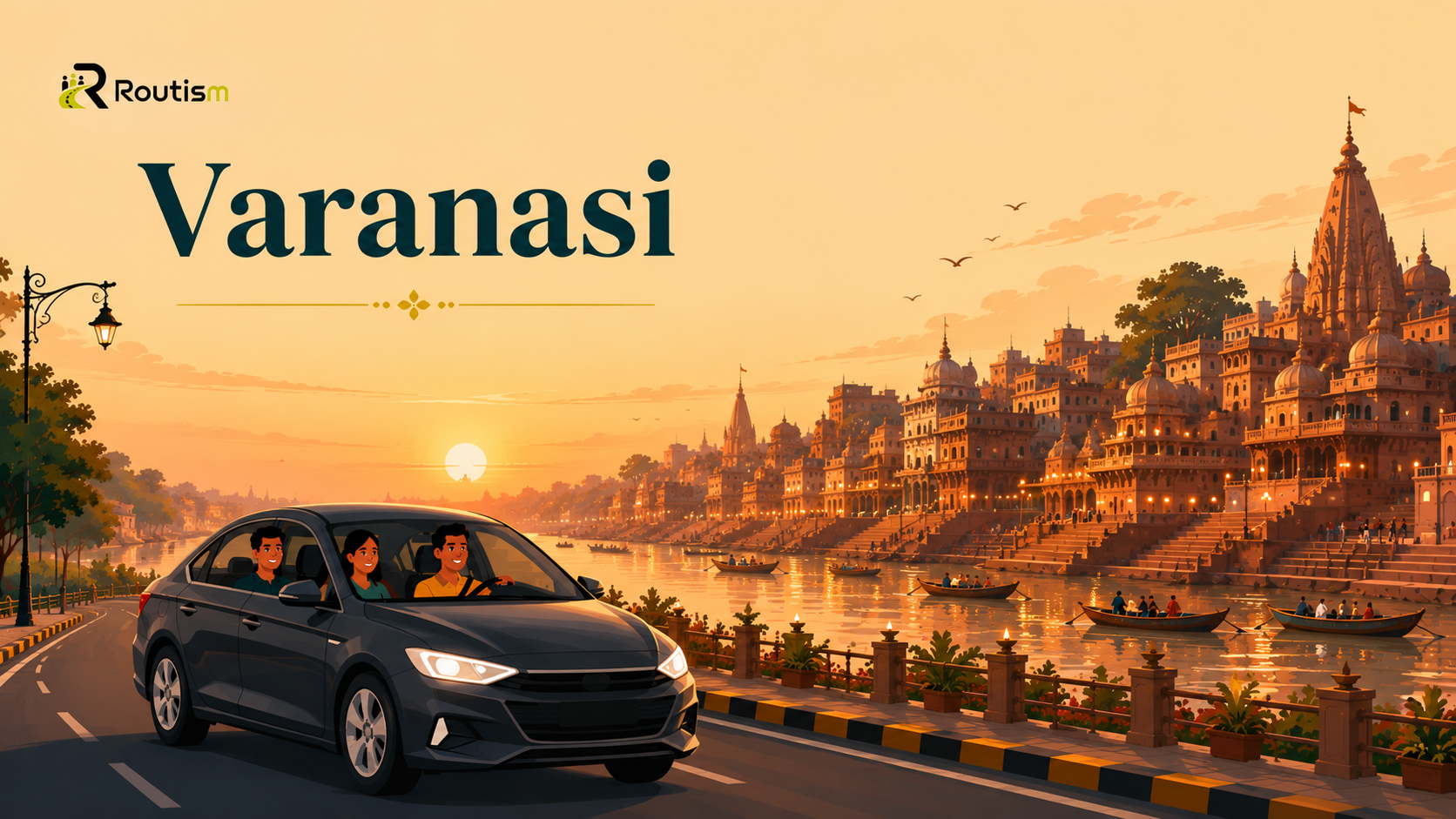
CityVaranasi, Uttar Pradesh's spiritual capital, is next on Routism's expansion map after Lucknow. Verified carpooling and ride sharing for BHU students, Cantt and Sigra office commuters, ghat-bound pilgrims and travellers heading to Prayagraj, Ayodhya or Gorakhpur — built for a city where narrow lanes and temple-corridor traffic make solo driving painfully slow.